Your Cart is Empty


March 23, 2026
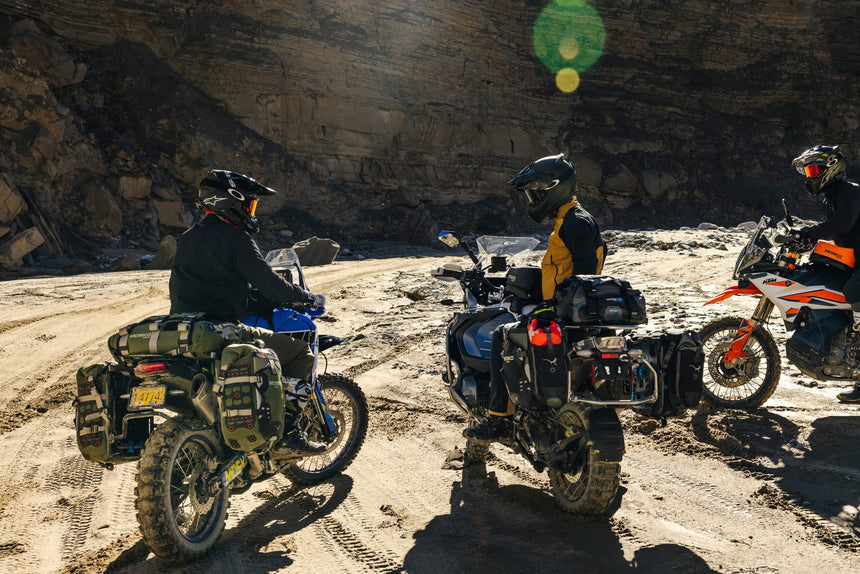
Backcountry trips come with risks–really, the risk is part of what draws adventure moto riders to remote off-road routes. Often, conversations around campfires focus on how to reduce that risk by setting up your bike with the right tire or the best farkles. One thing often not talked about enough in riding groups is: what happens if someone in our group gets injured?

Riding off-road motorcycles, it’s not really a matter of “if”, but “when” someone in the group experiences a crash that leads to an injury. Fortunately, in my riding career, I've been lucky to have only sustained minor injuries or simple broken bones. But like many of us, I don’t have to go far to find someone who has experienced more severe injuries while riding dirt. While I don’t think every ride or trip needs every bike to be a rolling ambulance, I still make a point of planning for everything that can go wrong. It’s actually easier than most think to build a First Aid Kit that matches the style and type of riding you’re doing.

Before getting into different levels of First Aid Kits for different kinds of riding, let's address the elephant in the room: training.
*Dusts off soap box* Having a First Aid kit is a great first step, but it won’t be nearly as effective without some proper training. A rider who doesn’t know why, when, and how to properly apply a tourniquet will be far less effective when a tourniquet is needed. It’s a great first step to find a First Aid class in your area or organize one for your local riding buddies to level up your skills together. The Wilderness First Aid (WFA) standard is a great entry point for people without prior First Aid experience. I always advocate for in-person training, but a good jumping-off point–especially if you don’t have previous first aid experience–is Survival Med. They have online training/resources, with the requirement to submit videos/photos of your work to pass the course. Here at Mosko, everyone who participates in our bi-annual team trip must have completed this course, followed by an in-person training we host at HQ before the trip. This ensures that virtual learning is backed up by in-person, hands-on training. I’ve been fortunate to attend multiple medical training sessions before deployments while in the Marine Corps, focusing on tactical combat casualty care (TCCC). I’ve seen firsthand how in-person, hands-on training can change someone’s comfort level and mindset when administering care to the injured.

With that out of the way, let’s start talking about First Aid kits and how to build one that applies to your style of riding. As a starting point, we’ll look at Mosko’s First Aid Kit, available on our website. The contents of Mosko’s First Aid kit are:
Superskin Assorted Bandage 12 Pack: 9 (1" x 3") and 3 (2" x 4") SuperSkin Bandages
Clean & Prep Mod: 4 Antiseptic Wipes, 4 Hand Sanitizers, and 1 Iodine Prep Pad
Mini Medication Mod: 1 APAP Extra Strength, 1 Aspirin, 1 Decorel Forte, 1 Diamode, 1 Diotame, 1 Diphen, 1 Medi-Meclizine, and 2 Ibuprofen
Nitrile Gloves: 2 pairs of gloves
Mini Wound Closure Mod: 1 pack of Wound Closure Strips and 1 Skin Glue
Burn Mod: 1 (4" x 4") Burn relief dressing and 4 Burn relief gels
4" Emergency Pressure Bandage
Compressed Gauze
Triangular Bandage: 40" x 40" x 56"
Super Wrap Self-Adherent Bandage Roll: 2" by 5 yards
Elastic Bandage
Cloth Medical Tape
Trauma Shears
Finger Splint
Splint
RATS Tourniquet
We built this kit in conjunction with My Medic to cover the most common injuries riders are likely to experience while riding motorcycles in the backcountry on a multi-day trip. It has a little bit of everything, including items for more serious situations, such as a full splint and a tourniquet. We designed custom bags that neatly contain the contents in an Aux Pox on your luggage, giving quick, easy access when needed. If you’re looking for a custom First Aid setup, we also just sell the bags so you can build your own.

It’s also worth noting the importance of emergency communication devices, such as the Garmin InReach or other SOS devices. Our co-founder Pete has put together a great series of videos on First Aid, SOS devices, evacuation services, and chase trucks for big ADV rides. I really recommend you check out those videos for some solid foundational knowledge, so we won’t go super in-depth about those topics here. But I will briefly recommend having your own SOS device, and advise you to make sure there are a few devices in your group. Even with an SOS device at the ready, having a first aid kit and some training will go a long way when the worst happens.
 Note: this is Casey from our events team, cool as a cucumber while using his InReach with multiple fractures after a KTM 890 high-speed get-off.😳 Be like Casey.

You might be saying, “Wade, that sounds great, but I like to run lighter and tighter on my moto trips.” If I were building a kit for a more stripped-down setup, I’d focus on items that stop the bleeding and stabilize broken bones. This list strips away the standard band-aids and stuff for small cuts and scrapes, focusing on the items you’ll need for real emergencies.
Nitrile Gloves: 2 pairs of gloves
4" Emergency Pressure Bandage
Compressed Gauze
Triangular Bandage: 40" x 40" x 56"
Super Wrap Self-Adherent Bandage Roll: 2" by 5 yards
Trauma Shears
Splint
RATS Tourniquet

“But I’m a hardcore singletrack rider! Every ounce and gram counts!” If that’s your ethos, we’d reduce even further and prioritize managing those major injuries that are life-threatening in the short term. This will primarily focus on stopping the bleeding.
Nitrile Gloves: 2 pairs of gloves
4" Emergency Pressure Bandage
Compressed Gauze
RATS Tourniquet
Once you’ve built the First Aid kit tuned to your riding, where are you going to carry it? Do you carry it on your body, or on your bike? What matters most is that it’s easily identifiable and that you have quick access to it when you need it. One thing to remember is that you might not be the one retrieving your First Aid Kit. Unfortunately, in the event of an injury, you might be the person who needs assistance. Regardless of where you mount your First Aid kit, I’m a big proponent of keeping your tourniquet on your person because it’s one item you’ll want sooner rather than later if you need it. Outside of the tourniquet, make sure your First Aid Kit isn’t at the bottom of the pannier or backpack, but do keep it protected from the elements and abrasion.

There are common conversations on social media, in forums, and at motorcycle events about the ideal tire, the best bike, or the superior oil. First Aid doesn’t seem to come up nearly as often as those aforementioned topics. I hope that First Aid starts to pop up more in the standard conversations that happen around campfires and over beers after your next ride. We all tend to take the time to research the contents of our tool kits, or spend the time practicing fixing a flat. We should all consider spending some time learning how to fix ourselves or our riding buddies if the worst happens in the backcountry.
Wade Olsen
Mosko Medical Coordinator, Events, and Marketing
USMC/MARSOC
Photos by Drew Martin and Scott Rounds, with crash images courtesy of Casey Sherbourne


Comments will be approved before showing up.





Ryan
March 31, 2026
All of this is so important! I have a Mosko Kit with me whenever I am on the bike and another small trauma kit in my riding pack (incase I get separated from the bike and can self treat).
———
Mosko Moto replied:
Sounds dialed! Thanks for reading.